
– What Losing 70kg Doing Bodybuilding Taught Me
My photo memories tell me it is five years since my last and final bodybuilding show. I spent eight years doing the sport and competed in five shows between 2014 and 2021. It was a ridiculous sport for me to go into. I am naturally fairly small and spent most of my adult life around 72kg. My muscle-building genetics aren’t particularly good and I refused to take steroids or PEDs. Despite this, I wanted to compete.
To build muscle I used the bodybuilding strategy of bulking and cutting, where I deliberately gained weight and then dieted back down again. In my biggest bulk I went from around 73kg to 90kg. I spent eight years competing in natural bodybuilding and did five shows between 2014 and 2021. Across those years I deliberately gained and lost weight repeatedly. In total I lost more than 70kg cumulatively, with my bodyweight moving up and down by more than 140kg. This wasn’t overly healthy, of course, but repeatedly gaining and losing weight gave me an experience of fat loss that most trainers have never had. By then I had already spent more than a decade working as a personal trainer and helping other people lose weight. Bodybuilding allowed me to go beyond the theory and actually live it. The main things I learnt from the process were –
There Are A Lot of Ways to Lose Fat – One advantage of dieting so many times was that I could experiment. Over the years I lost fat using calorie-controlled diets, low-carbohydrate diets, vegan eating, intermittent fasting and longer periods without food.
I experimented with eating only junk food, only sugar and even McDonald’s to replicate science teacher John Cisna’s experiment, where he lost weight eating nothing but McDonald’s. I did one million steps in a month and once completed a five-day water fast. Some experiments were useful, some were stupid and some I wouldn’t recommend anyone repeats.
What they showed me was that there are many ways to lose fat. The underlying requirements don’t suddenly change because you call your approach keto, fasting, clean eating or anything else. What changes enormously is your ability to actually do it. A theoretically perfect plan you cannot follow isn’t a particularly good plan.
Knowing What To Do Was The Easy Bit – For my first bodybuilding shows I coached myself. Later, I worked with former NABBA world champion Mark Krah. By this point I had also been a personal trainer for well over a decade. There wasn’t much mystery around what I needed to do.
During one competition preparation I was eating around 2,000 calories while walking more than 20km a day on top of training. Knowing what to do was easy. Getting myself to keep doing it was hard. I was tired, hungry, bored of dieting, weak at times and regularly wanted to quit.
Strangely, little things kept me going. Tomato ketchup added enough taste that I was willing to repeatedly eat the same meals. I ate a small Dairy Milk every day. Every Sunday I ate considerably more as part of a planned day off and looked forward to it all week.
You could easily have made my diet nutritionally “better”. That wasn’t the problem I needed to solve. The problem was keeping myself doing something difficult for long enough to get on stage.
Your Body Gets A Vote – Bodybuilding also taught me just how powerful the body’s drive to eat can become.
When you haven’t eaten enough for long enough, especially when already incredibly lean, food starts becoming much more important to you. This isn’t simply a failure of discipline. Your body has systems specifically designed to stop you disappearing into nothing.
When comfortably fed, it is easy to imagine hunger is something you can simply ignore. When your body really wants food, the negotiation becomes very different.
It eventually changed how I thought about fat loss. I began seeing it much more like surfing a wave than piloting a ship. You can influence where you go, but you don’t have complete control over the forces acting upon you.
Motivation Can Take You Somewhere Stupid – We tend to talk about motivation as if more is always better. Bodybuilding taught me otherwise.
During the final stages of one competition preparation I was walking close to 30km a day. For a couple of days my food intake dropped to around 1,000 calories. I got ridiculously lean.
The motivation worked. It helped me achieve exactly what I was trying to achieve. That doesn’t mean what I was doing was sensible.
The same happened while gaining weight. At one point I reached around 90kg. Technically the bulk was working because I was getting bigger. Unfortunately none of my clothes fitted, jogging with clients became horribly slow and eating enough food to keep gaining weight became a job in itself. I didn’t particularly enjoy being that size.
I had become very good at pursuing a goal while ignoring some of the reasons not to pursue it. Motivation is useful, but it isn’t wisdom.
Getting Lean Can Mess With Your Head – Before bodybuilding I had never experienced many issues around body image.
Competing introduced me to a world where you stand on stage wearing very little while people literally judge your body. You naturally become incredibly good at spotting what is wrong.
The strange part comes afterwards. You have photographs of yourself at a level of leanness you cannot sensibly maintain and then deliberately gain weight. You can still be incredibly lean by normal standards while feeling fat because you are comparing yourself with the ridiculous version of yourself from a few weeks earlier.
At times during bulks I didn’t want to take my top off because my current body didn’t look like the photographs people had seen of me. It taught me how useless objective reality can sometimes be when it comes to how someone feels about their body.
Getting The Result Is Not The End – Bodybuilding has a very obvious finish line. You have a date when you need to stand on stage. This makes motivation easier. The problem is that the competition ends. Your body doesn’t suddenly know the project is finished.
You can spend months becoming increasingly hungry while getting leaner, then suddenly remove the goal that was giving you a reason not to eat. This is where many physique competitors struggle. It taught me the importance of zooming out. Don’t plan everything up until the finish line, plan beyond it.
For bodybuilding that may mean stabilising weight regain, relearning normal eating habits and working on body image. The same principle applies elsewhere. Losing the weight isn’t the end of weight loss. Running the marathon isn’t necessarily the end of the marathon project.
What Does This Mean For You?
Losing 70kg cumulatively doesn’t mean I know what it is like to have lived at a much higher bodyweight for twenty years. My situation was completely different. What bodybuilding did was allow me to experience some of the things clients had been describing to me for years.
For your own goals, don’t just ask “Will this work?” Ask whether it works for you. Can you cope with the hunger? Do you enjoy it enough? Does it fit your life? What happens when motivation disappears? And, most importantly, could you still see yourself doing some version of it once the initial goal has been achieved?
Bodybuilding was an amazing experience. I achieved something that really didn’t suit my natural abilities. I also learnt more about the practical reality of changing your body than I could ever have learnt from another qualification, course or textbook.
About Ben Wilson
Ben Wilson is a personal trainer based in Battersea, London. He has worked as a personal trainer since 2002 and is the author of four health and fitness books. His sporting background includes rugby, 400m sprinting, natural bodybuilding and Hyrox.
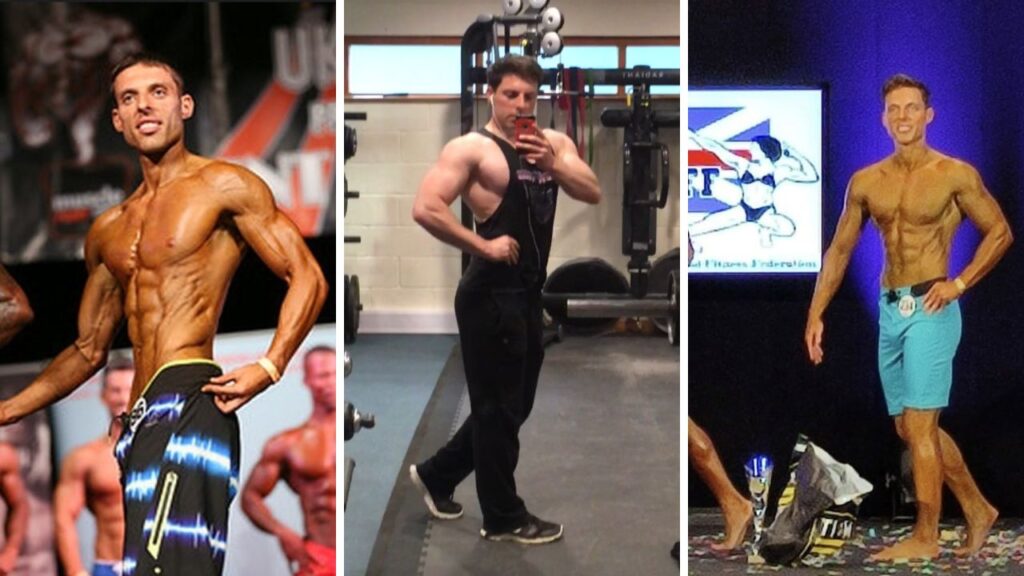
Photo – My first show, in 2014, where I came last place, at my heaviest of 90kg in 2017 and my final competition in 2021 –
Need Help With Your Health & Fitness?
I have worked as a personal trainer for over 20 years, helping people get fitter, healthier and more confident in their bodies. My approach combines exercise, nutrition, psychology and behaviour change to help you make progress that works in the real world and lasts.
Personal Training in Battersea, London – I provide one-to-one personal training in Battersea and the surrounding areas, including sessions in Battersea Park, private gyms and clients’ homes. Find out more about Personal Training in Battersea >>>
Online Personal Training – I coach people throughout the UK and worldwide through live one-to-one video personal training, alongside online coaching covering exercise, nutrition, habits and behaviour change. Everything is built around your goals, circumstances and lifestyle. Find out more about Online Personal Training >>>
About Ben Wilson – I’ve been a personal trainer since 2002 and have written four books on health, fitness and behaviour change. My own sporting background has included rugby, 400m sprinting, natural bodybuilding and Hyrox. Read more about me >>>
Free Health & Fitness Advice – Join my weekly newsletter for practical advice on exercise, nutrition, motivation, habits and making health & fitness work in real life. Join my newsletter >>>
My personal training and online coaching services combine nutrition, exercise, postural correction and behaviour change techniques to ensure you get fantastic results.
Download my Health & Fitness Emergency First Aid Toolkit which has some simple to use techniques which are really powerful! Use the box on this page to understand how these techniques are all brought together to ensure results.
I coach people in person in London (Battersea Park & surrounding areas)
I also train people worldwide on video in my Online Personal Training - One to One Sessions.
The best way to understand how these work is to contact me for your free sample session.
Whatsapp me or call Ben on 07915 397 703 or email me at info@one2onenutrition.co.uk