
SUMMARY – Helping someone you love become healthier can be difficult because advice and encouragement can easily feel like nagging. The most effective approach is usually to meet the person where they are, understand what is stopping them, make change feel small and build their belief that improvement is possible. Permission-based and subtle “secret coaching” can also help make healthier behaviours easier without forcing change.
***********
When you start making progress with your own health & fitness, it is natural to look at the people around you and want the same for them. The problem is that helping someone close to you change can be surprisingly difficult. Gentle encouragement gets interpreted as nagging, good advice gets ignored and before you know it you have accidentally become an annoying personal trainer they never asked for. So, how can you actually help?
Be A Role Model…Up To A Point – It is good to lead by example as your actions can inspire other people. However, being a role model does not always have the same effect when you are very close to someone. Everything you do gets interpreted through their world view, not yours. Even when someone wants support, we have a strange tendency to turn ourselves into the most dreadful version of a coach imaginable. Some of the worst coaching I have ever seen has come from well-meaning boyfriends and pushy parents. We suddenly make people exercise too hard, force them to do things they are not ready for or give advice we aren’t even able to follow ourselves. When helping someone, don’t try to become what you think a coach should be. Just help them as the person you already are.
Meet Them Where They Are – The biggest thing you can do is meet someone where they currently are. At one end, they may not even be thinking about improving their health & fitness. They may even actively fight against any suggestion of change. Someone else may want to change but has not quite taken action yet. The mistake is treating someone as if they are further along than they really are. If your partner wouldn’t consider exercising because they have failed so many times, are worried about their knee and hate gyms, giving them a list of exercises is completely the wrong place to start. You first need to understand what is stopping them.
What is Stopping Them From Changing? – Find out what is actually putting them off. If they don’t want to join a gym, point out they could get fit at home. If they are worried about being hungry while losing weight, show them that improving nutrition doesn’t have to mean starving themselves. If meditation sounds long and boring, suggest trying it for five minutes. Your goal is not to convince them to completely transform their life. It is simply to remove enough objections that starting something becomes possible.
Make Change Feel Small – Avoid turning every new behaviour into a commitment for life. Getting someone to exercise for five minutes today is much easier than asking them to commit to training three times a week forever. “Let’s try a week without drinking and see how we feel” sounds very different from “It’s time you gave up alcohol.” Maybe they want to experiment without anyone knowing rather than becoming the centre of discussion at the next dinner party. Make the first step so small that there is very little reason to say no.
Build Their Belief -If someone has failed repeatedly, they may simply no longer believe change is possible. Remind them of things they have successfully changed before, such as “You learnt to drive really quickly and you’re good at that, maybe you could learn to exercise too.” “You gave up smoking years ago and never went back, so I’m sure you could experiment with reducing your alcohol for a couple of weeks.” You are not trying to convince them that they will definitely succeed. You are simply opening up the possibility that they could.
Give Them A Reason To Act Now -People can know they should change for years without actually doing anything. Sometimes they need a reason why it matters now. The difficult bit is bringing this up without nagging them. One of the easiest ways is to use questions rather than statements, How do you feel about being 40? Is there anything you’d like to change this year? How would you like your health to look in ten years? Their answers may create some motivation, or they may reveal the real reasons they haven’t changed already.
What is Permission-Based Coaching? – One of the biggest mistakes people make is not knowing when the coaching conversation has finished. Your partner might be very keen to talk about losing weight this afternoon. That does not mean they gave you permission to have a go at them for ordering chocolate cake six hours later. Remember, you are not their official coach, trainer or therapist. Even if you were, you would prob you would probably wait until an appropriate time to discuss it. If someone wants your advice, give it. When the conversation is over, go back to being their partner, friend, parent or child.
What is Secret Coaching? – There are also plenty of ways you can help without making a big deal about it. You could suggest trying some different meals, and then you choose something that is lower calorie and healthier, go for a walk when you catch up, ask them to join you in giving something up for Lent or suggest an activity that happens to involve moving. This is what I think of as secret coaching. You create opportunities for healthier behaviours but give them complete permission to say no.
You do need to be careful though. Don’t secretly coach someone into a Pilates class that leaves them unable to walk for a week. You have just reconfirmed their belief that exercise is horrible. Likewise, don’t serve them “healthy” food that leaves them miserable, hungry and desperate for something with some taste. The experience needs to make the healthier behaviour seem more appealing, not less.
What Does This Mean For You?
If you have someone you want to become healthier then resist the temptation to constantly tell them what they should be doing. Meet them where they are. Find out what is actually stopping them and help make the first change incredibly small.
Remember it is their health and their decision. You can create opportunities, ask questions, remove barriers and quietly make healthier choices easier. Albeit, sometimes the best way to help someone change is to stop trying so hard to change them.
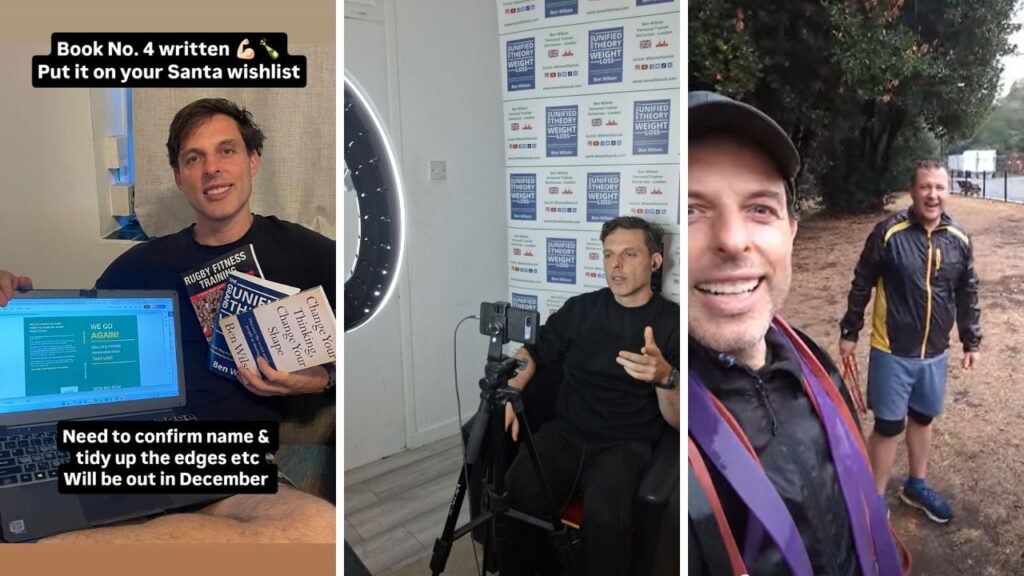
Photo – Talking of helping others improve their health & fitness. The first pic is my finished new book which is to be released in December. The other pics are me doing a podcast and training a client in the rain last week –
Summary
- You cannot force someone you love to improve their health & fitness.
- Leading by example can help, but encouragement from friends and family can easily feel like nagging.
- Meet someone at their current level of readiness rather than giving advice they are not ready to use.
- Find out what is stopping them and help remove those barriers.
- Make the first change small rather than presenting it as a lifelong commitment.
- Previous successes can help someone rebuild their belief that change is possible.
- Ask questions rather than constantly telling someone what they should do.
- Permission-based coaching means giving advice when someone actually wants your help.
- “Secret coaching” means creating opportunities for healthier choices while leaving the person free to say no.
- The aim is to make healthy behaviours feel easier and more enjoyable, not to force someone to change.
Need Support Getting In Shape?
Changing your body on your own without support or an effective system usually ends in failure sadly. To avoid this outcome you can become one of my coaching clients either online or in person. I provide Holistic, Healthy & Sustainable Body Transformations. Contact me to discuss your goals further or see below for more details and the options available to you based on your location / preferences:
Worldwide (Online) – For transformations, coaching and support wherever you are in the world read more here>>>>
London (Battersea) – If looking for Personal Training Battersea please contact me. I am available for sessions in homes, private gyms or Personal Training Battersea Park. To see my locations please visit my Battersea Personal Trainer page>>
London (Oval / Kennington) – For Personal Training in Oval & Kennington please contact me. I am available for sessions in homes, private gyms or parks.
**************
Read My Book – The Grand Unified Theory of Weight Loss – My latest book is available in print, kindle/ebook and audio formats. You can read more about it and see where it is available here>>>
Follow Me – You can get more great advice, tips, hacks and more by following me on one of my social media channels. Follow Me>>>
Instagram>> You Tube>> Facebook>> Twitter>> Tik Tok>> My Weekly Newsletter>>
**************
My personal training and online coaching services combine nutrition, exercise, postural correction and behaviour change techniques to ensure you get fantastic results.
Download my Health & Fitness Emergency First Aid Toolkit which has some simple to use techniques which are really powerful! Use the box on this page to understand how these techniques are all brought together to ensure results.
I coach people in person in London (Battersea Park & surrounding areas)
I also train people worldwide on video in my Online Personal Training - One to One Sessions.
The best way to understand how these work is to contact me for your free sample session.
Whatsapp me or call Ben on 07915 397 703 or email me at info@one2onenutrition.co.uk